Table of Contents

- Powerful yet Compact: Boasting a 1,500W AC output and a 3,000W surge peak, the Solar Generator 1000 V2 can power multiple appliances, including AC units, fridges, and electric pots. With a 1,070Wh cap…
- One Hour Fast Charging: Charge your Explorer 1000 v2 Portable Power Station from 0% to 100% battery level in just one hour with emergency charging activated via the Jackery App. It defaults to 1.7 hou…
- 10 Year Lifespan: The Explorer 1000 v2 portable power station is equipped with a durable LFP battery, maintaining over 70% of its original capacity even after 4,000 charge cycles, offering longevity e…
Can You Plug a Power Strip Into a Power Station?
(Affiliate Disclosure: Some of the links in this article are affiliate links. If you purchase through these links, Gadget Earth may earn a small commission at no extra cost to you. We only recommend sustainable gear, off-grid tech, and resources we rigorously evaluate. As an Amazon Associate, we earn from qualifying purchases.)
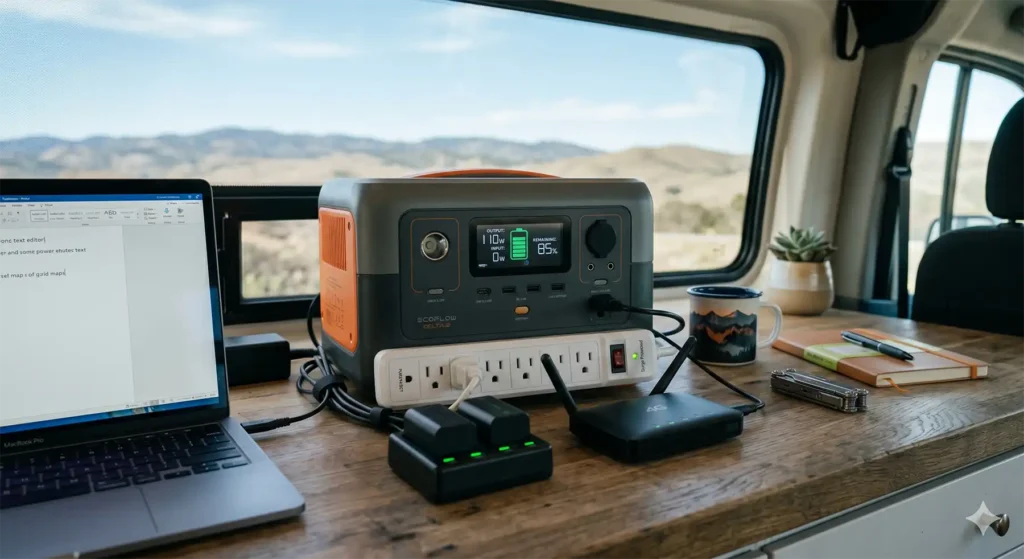
When you set up a remote mobile office in a van or an off-grid cabin, you quickly realize that modern portable power stations rarely have enough AC wall outlets for all your gear. You have a laptop charger, a camera battery hub, a monitor, and a router, but only two plugs on the front of your Jackery or EcoFlow. The immediate instinct is to grab a cheap power strip.
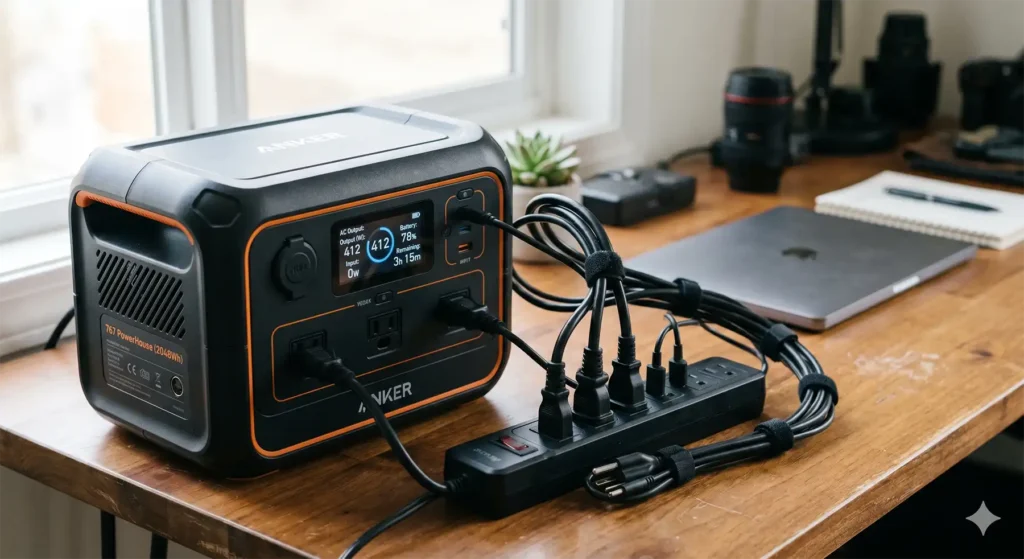
Can you plug a power strip into a power station? Yes, you can safely plug a basic power strip into a portable power station to expand your number of outlets. However, you must ensure that the combined wattage of all devices plugged into the strip does not exceed the maximum continuous AC output rating of your power station’s inverter.
While it works perfectly for low-draw devices, there is one major, potentially dangerous mistake that off-grid beginners make when choosing their power strip. Here is exactly how to safely expand your power station’s capacity.
The Golden Rule: Adding Outlets Doesn’t Add Power
A power strip is simply an extension cord with multiple doors; it does not magically create more energy.
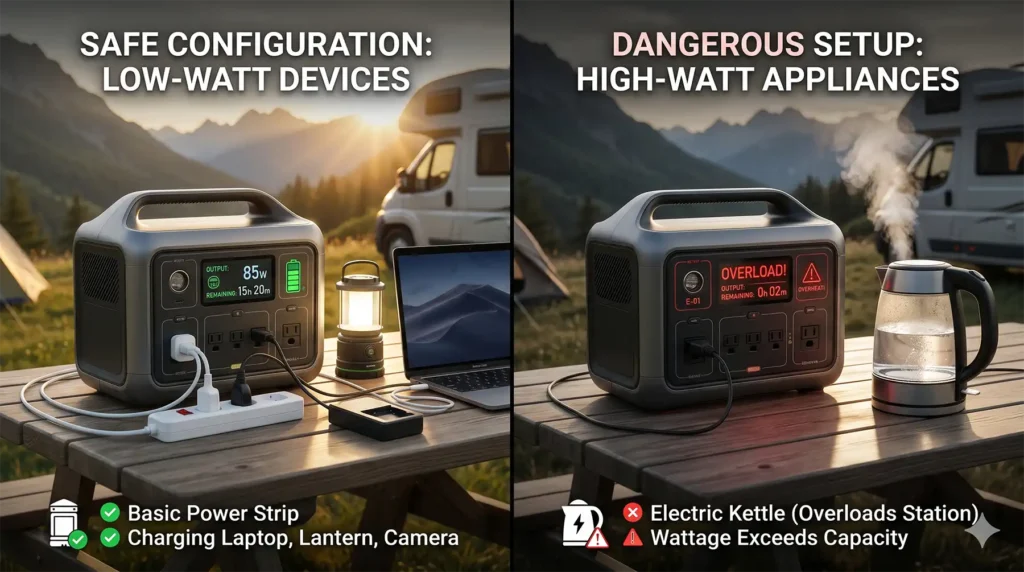
Every portable power station has a strict limit on its internal AC inverter. For example, if you own a 500W power station, it can only output 500 watts at any given moment.
If you plug a power strip into that station, the total combined draw of everything on that strip must stay under 500 watts.
- Safe Setup: A laptop (65W) + Starlink mini (30W) + Camera charger (15W) = 110W Total. The power station handles this easily through the power strip.
- Dangerous Setup: A laptop (65W) + a small travel kettle (600W) = 665W Total. The power station will instantly trip its internal overload protection and shut down, cutting power to everything.
The Hidden Danger: Avoid Surge Protectors
This is the most critical safety distinction when living off-grid. A standard “power strip” and a “surge protector” look identical, but they function differently.
You should never plug a surge protector into a portable power station.
Here is why: Portable power stations (especially premium ones) output what is called a “Pure Sine Wave”—a clean, regulated electrical signal. They also have highly sensitive, built-in Battery Management Systems (BMS) that constantly monitor the electrical flow for shorts or surges.
Surge protectors have their own internal circuitry designed for unstable city grids. When you plug a surge protector into a power station, the two safety systems can conflict. The surge protector’s internal components (MOVs) can incorrectly interpret the power station’s regulated AC power as a fault. This can cause the surge protector to prematurely fail, or worse, it can confuse the power station’s BMS, leading to a tripped inverter or permanent damage to the unit.
The Fix: Always buy a basic, “dumb” power strip with zero surge protection circuitry. Look for models specifically labeled as “Relocatable Power Taps” or simply plain extension cords with multiple heads.
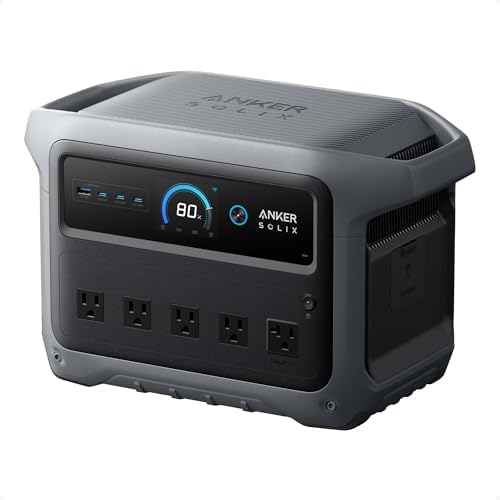
- 49 Min UltraFast Recharging: With upgraded HyperFlash tech, fully recharge at 1,600W—for outage prepping, camping trips, or tailgating events. Enable it in the Anker app.
- 2,000W Output via 10 Ports: Delivers 2,000W (3,000W peak) and 1,024Wh capacity. Power up to 10 devices—ideal for emergency backup, remote work setups, tiny homes, and off‑grid living.
- Compact and Portable: Easily carry, store, and move from room to room, your RV, or even on beach and park outings. C1000 Gen 2 is 14% smaller and 11% lighter than similar models.
- Powerful yet Compact: Boasting a 1,500W AC output and a 3,000W surge peak, the Solar Generator 1000 V2 can power multiple appliances, including AC units, fridges, and electric pots. With a 1,070Wh cap…
- One Hour Fast Charging: Charge your Explorer 1000 v2 Portable Power Station from 0% to 100% battery level in just one hour with emergency charging activated via the Jackery App. It defaults to 1.7 hou…
- 10 Year Lifespan: The Explorer 1000 v2 portable power station is equipped with a durable LFP battery, maintaining over 70% of its original capacity even after 4,000 charge cycles, offering longevity e…
The Gadget Earth Hack: Skip the AC Inverter Entirely
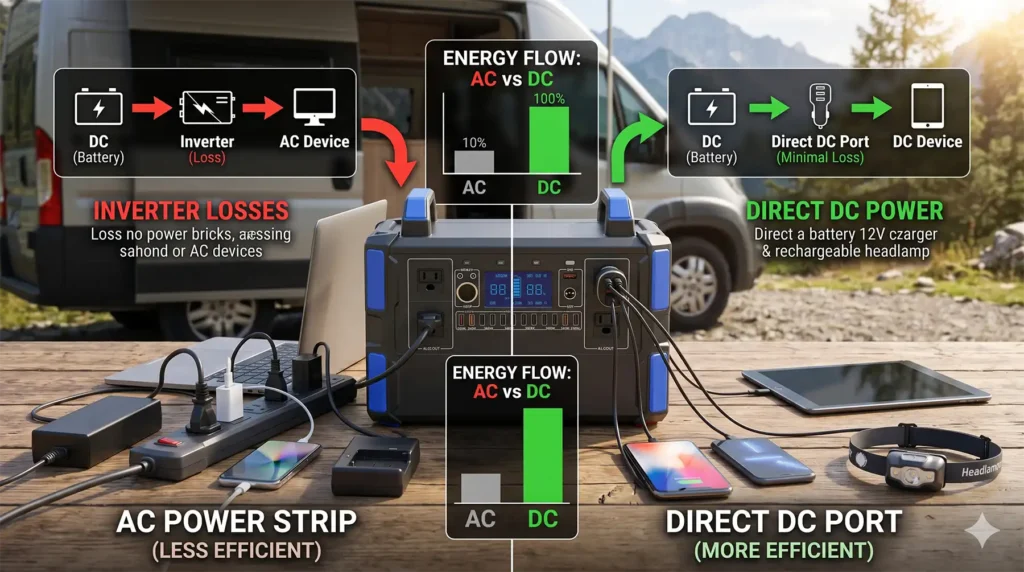
While a basic power strip is safe, it is highly inefficient. When you use the AC outlets on your power station, the internal inverter wastes about 15% to 20% of your battery’s energy just converting the DC power to AC.
If you are just trying to charge USB devices (phones, tablets, USB-C laptops, drone batteries), skip the power strip completely.
Instead, buy a high-wattage 12V USB-C Car Charger (the kind that goes into a cigarette lighter). Plug it directly into the 12V DC port on the front of your power station. This allows you to charge multiple USB devices simultaneously while keeping the power in DC format the entire time. You will save massive amounts of energy and extend your off-grid battery life significantly.
The Final Verdict
Yes, grab a basic, non-surge-protected power strip to run multiple low-wattage AC devices from your power station. Just do the math on your total wattage draw before flipping the switch, and never try to run high-heat appliances simultaneously on a single inverter.