Table of Contents
Attachable Solar Panel

- Perfect for Solar Generators: Plug & play. The SOLUPUP bifacial solar panel features a 5-in-1 multi-function connector (XT60, DC5521, DC7909, DC8020, and Anderson) and is designed to work seamlessly w…
- Bifacial Technology: Unlike standard solar panels that only capture sunlight from the front, our bifacial design absorbs reflected light from the back side as well. This means that under the same ligh…
- Power Upgrade: Need more juice? Connect two 100W solar panels in series or parallel using a Y-cable (sold separately) to double the output. Ideal for larger power stations, faster emergency backup, or…
Solar Backpack

- VERSATILE DESIGN: Transform from a backpack to a tote effortlessly; ideal for work, travel, or casual outings
- SMART STORAGE: Includes multiple pockets with zippered sections; organize your phone, laptop, and A4 files
- PERFECT FOR ANY LIFESTYLE: Adaptable to modern women’s dynamic lifestyles; use as a travel purse backpack or stylish tote
Solar Backpack vs. Attachable Solar Panel: Which is Better for Off-Grid Travel?
(Affiliate Disclosure: Some of the links in this article are affiliate links. If you purchase through these links, Gadget Earth may earn a small commission at no extra cost to you. We only recommend sustainable gear, off-grid tech, and resources we rigorously evaluate. As an Amazon Associate, we earn from qualifying purchases.)
When you’re trekking through the backcountry or working remotely from a sun-drenched coastal town, the dream is simple: infinite power without needing a wall outlet. To achieve this, you essentially have two paths: a backpack with a built-in solar panel or a high-quality standalone panel that you clip onto your existing gear.
Which is better, a solar backpack vs. an attachable solar panel? For most digital nomads and serious hikers, an attachable solar panel is the superior choice. While solar backpacks offer “all-in-one” convenience, attachable panels are typically more efficient, more durable, and far more versatile, as they allow you to upgrade your bag and tech independently.
Before you invest in your off-grid setup, let’s break down the pros and cons of integrated vs. modular solar power.
The Solar Backpack: The “All-in-One” Solution
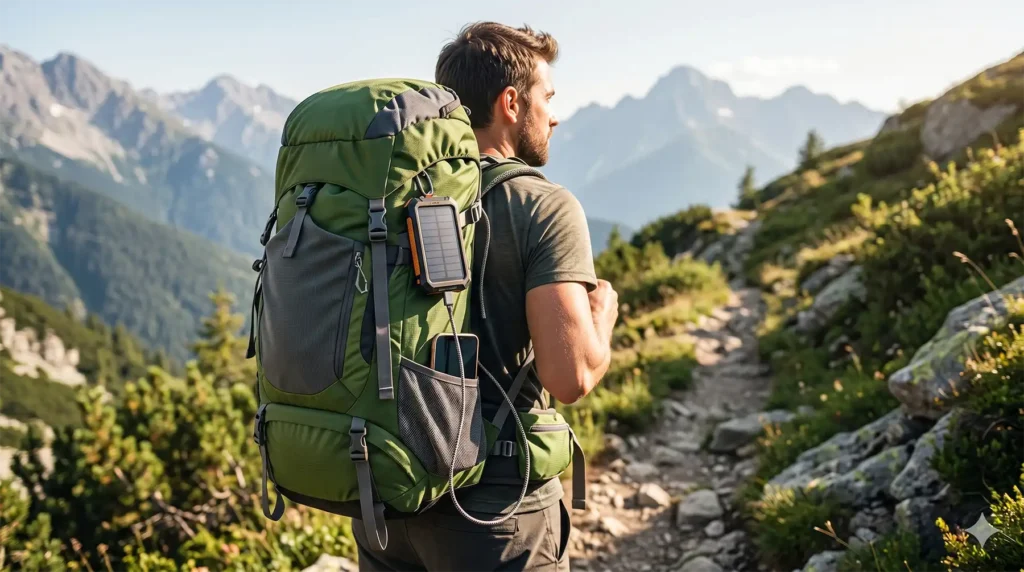
A solar backpack features a thin-film solar cell integrated directly into the fabric or a hard-shell front panel.
The Pros:
- Seamless Integration: No dangling wires or carabiners. Everything is streamlined and designed to work together.
- The “Always-On” Factor: You don’t have to think about it. As long as you are wearing the bag and the sun is out, you are generating a trickle charge.
- Aesthetics: Modern solar bags (like those from Voltaic Systems or Beam) look sleek and professional, blending into urban environments better than a rugged folding panel.
The Cons:
- The “Single Point of Failure”: If the zipper breaks or the bag rips, your solar panel is now stuck to a useless backpack. Conversely, if the solar panel fails, you’re carrying a heavier-than-average bag for no reason.
- Fixed Orientation: You have to be walking directly away from the sun for the panel to get maximum exposure. You can’t easily prop the bag up at a 45-degree angle without the contents spilling out.
The Attachable Solar Panel: The Modular Powerhouse
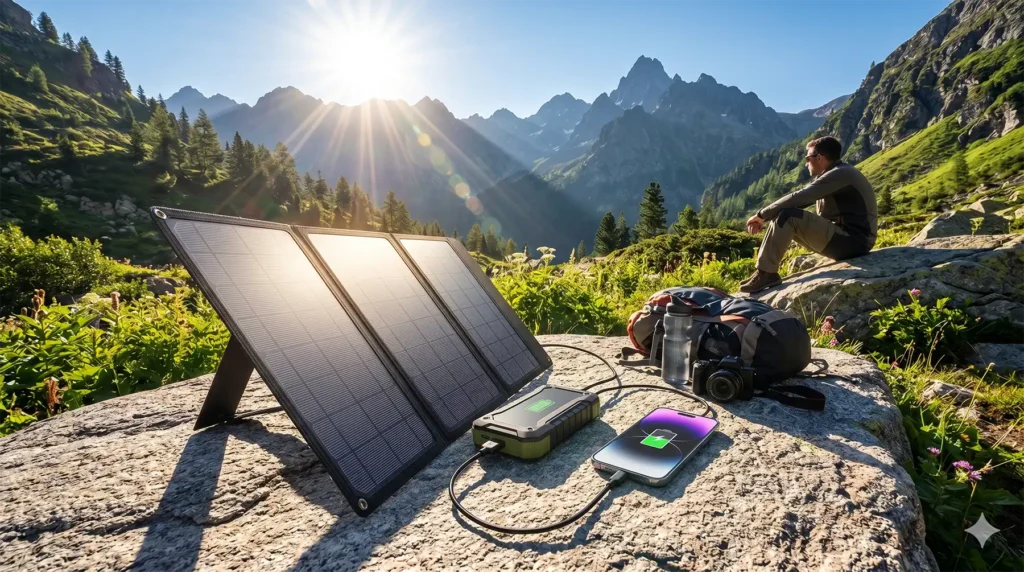
These are standalone, foldable panels (usually 14W to 28W) designed with eyelets or carabiner clips.
The Pros:
- Superior Efficiency: Standalone panels generally use higher-quality Monocrystalline cells and have a larger surface area than the small panels found on backpacks.
- Maximum Versatility: You can clip it to your favorite hiking pack, lay it on your tent, or suction-cup it to a train window. When you arrive at camp, you can leave the panel in the sun while taking your bag inside.
- Easily Replaceable: Tech moves fast. If solar efficiency doubles in two years, you can simply buy a new $60 panel without having to replace your entire $200 backpack.
The Cons:
- The “Clutter” Factor: It can be a bit fiddly. You have to deal with carabiners and wires hanging off your bag, which can snag on branches during heavy bushwhacking.
- Set-up Time: It takes a minute to unroll and clip it on, whereas a solar backpack is always ready.
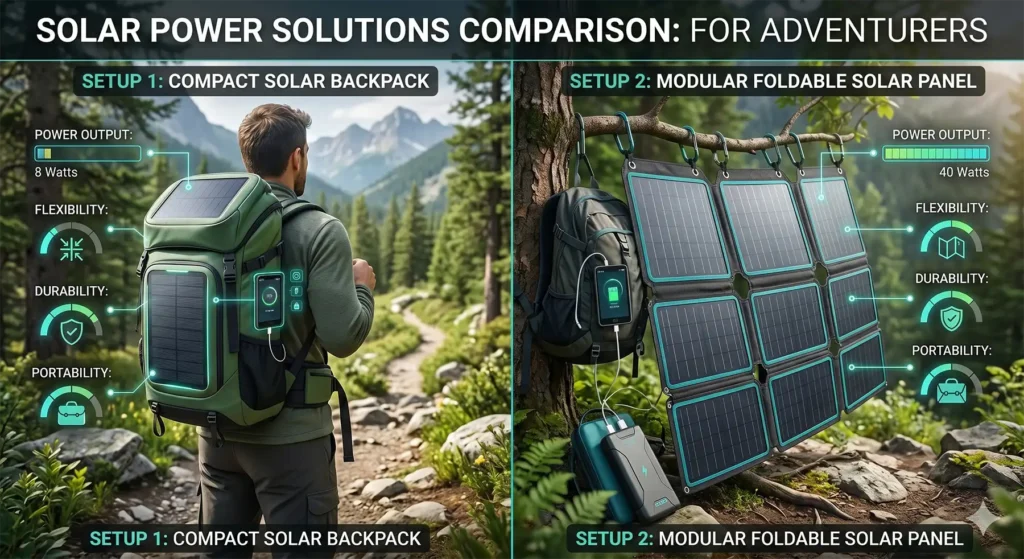
Head-to-Head: Real-World Comparison
| Feature | Solar Backpack | Attachable Solar Panel |
| Power Output | Usually 5W – 10W (Low) | Usually 14W – 28W (High) |
| Weight | Heavier (Integrated components) | Lightweight & Modular |
| Durability | Vulnerable to bag wear & tear | Often more rugged/waterproof |
| Cost | More expensive ($150 – $300) | More affordable ($50 – $120) |
| Upgradeability | Impossible | Very Easy |
The Gadget Earth Verdict
At Gadget Earth, we prioritize longevity and sustainability.
A solar backpack is a “lifestyle” product. It’s great for students or light commuters who want to keep their phone topped up while walking between classes.
However, for the remote professional or off-grid traveler, the attachable solar panel is the undisputed winner. The ability to move your power source between different bags, prop it up at the perfect angle for the sun, and replace it independently of your luggage makes it a far more sustainable and effective investment.
Our Recommendation: Pair a high-quality 21W or 28W foldable panel with your favorite ergonomically designed backpack. You’ll get more power for less money, and your gear will last twice as long.
- Perfect for Solar Generators: Plug & play. The SOLUPUP bifacial solar panel features a 5-in-1 multi-function connector (XT60, DC5521, DC7909, DC8020, and Anderson) and is designed to work seamlessly w…
- Bifacial Technology: Unlike standard solar panels that only capture sunlight from the front, our bifacial design absorbs reflected light from the back side as well. This means that under the same ligh…
- Power Upgrade: Need more juice? Connect two 100W solar panels in series or parallel using a Y-cable (sold separately) to double the output. Ideal for larger power stations, faster emergency backup, or…