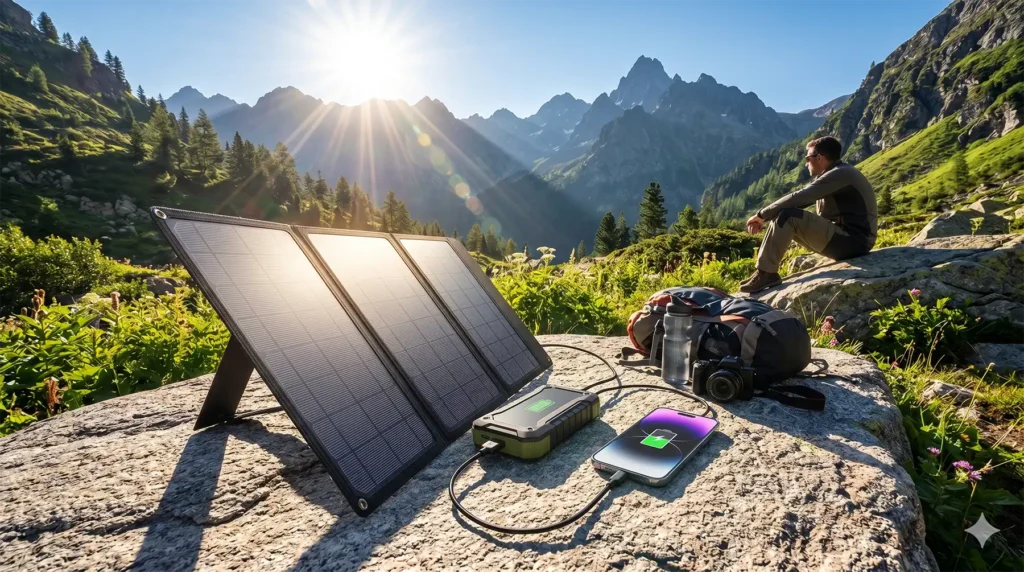
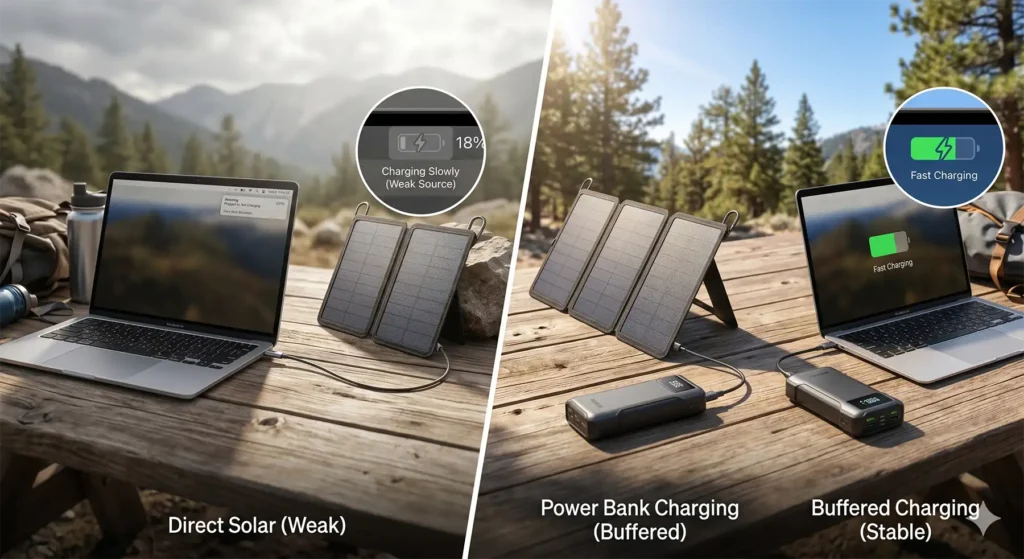
If you are planning an off-grid camping trip, building an emergency kit, or setting up a remote hunting cabin, you probably have a solar panel setup ready to roll. Solar is silent, reliable, and incredibly simple. But solar has a massive, obvious vulnerability: it completely stops working at night, under heavy tree canopies, or during massive winter storms.
If your portable power station runs out of juice in the middle of a 3-day blizzard, solar panels cannot help you.
To build a truly resilient, 24/7 off-grid power ecosystem, you need to diversify. You need a portable micro-wind turbine.
Operating as the perfect aerodynamic counterpart to your solar panels, a portable wind turbine generates clean electricity during severe rainstorms, at night, and during winter months when sun angles are low. And because modern micro-wind turbines fold down to fit inside a backpack, they are now highly practical additions to any camping or overland setup.
In this engineer-grade guide, we review the best portable wind turbines for camping and off-grid backup, explain the physics of micro-wind generation, and show you how to safely integrate them with your existing portable power stations.
📋 Table of Contents
- 1. Why Portable Wind Turbines are the Ultimate Solar Backup
- 2. How Micro-Wind Generators Work in Off-Grid Environments
- 3. Detailed Reviews of the Best Portable Wind Turbines for Camping
- 4. Responsive Product Comparison Table
- 5. Comprehensive Portable Wind Turbine Buying Guide
- 6. Renting vs. Packing: Mounting and Physical Constraints
- 7. Frequently Asked Questions (FAQs)
Why Portable Wind Turbines are the Ultimate Solar Backup
To survive off-grid indefinitely, you must balance your energy budget. Relying solely on solar creates a bottleneck.
       [☀️ Daytime / Sunny]  ──► [🔌 Solar Panels Charge Battery]
       [🌑 Night / Stormy]   ──► [💨 Micro-Wind Turbine Charges Battery]
                                          │
                                          ▼
                         [🔋 Continuous 24/7 Power Supply]
The Complementary Physics of Wind and Solar
- Solar Peak: Occurs during bright, calm summer days when wind speeds are typically at their lowest.
- Wind Peak: Occurs during stormy, overcast winter days, at night, or at high-altitude mountain saddles when solar panel output drops to zero.
By combining a micro-wind turbine with your existing panels, you build a hybrid renewable energy system.
When connected to a high-capacity generator (as discussed in our best off-grid power station for digital nomads guide), you achieve complete off-grid energy independence, keeping your laptops, Starlink routers, and medical CPAP machines powered 24/7.
How Micro-Wind Generators Work in Off-Grid Environments
A portable wind turbine is essentially a scaled-down version of the massive commercial turbines you see on wind farms.
- The Rotor Blades: Specially pitched aerodynamic blades capture the kinetic energy of moving air and spin an internal shaft.
- The Alternator/Generator: A permanent magnet generator (PMG) converts the spinning mechanical shaft energy into alternating current (AC) electricity.
- The Charge Controller: Because wind speeds shift constantly, the output voltage fluctuates wildly. A built-in or external charge controller rectifies the fluctuating AC power into a stable, flat Direct Current (DC) voltage (usually 12V, 24V, or USB 5V/PD) to charge batteries safely.
Detailed Reviews of the Best Portable Wind Turbines for Camping
1. Texenergy Infinite Air 18 Portable Wind Turbine
The Best Premium, Lightweight Tactical Wind Generator
- MSRP: $299.00
- Max Output: 18 Watts (USB-C PD & 12V DC options)
- Start-up Wind Speed: 7.5 mph (12 km/h)
- Packed Weight: 3.2 lbs (1.4 kg)
=========================================
         TEXENERGY AIR 18 RATING
=========================================
Wind Efficiency:  ████████████████████ [10/10]
Build Quality:    ████████████████████ [10/10]
Portability:      ████████████████████ [10/10]
Startup Speed:    ████████████████░░░░ [8/10]
Value:            ██████████████░░░░░░ [7/10]
=========================================
For wilderness backpackers, tactical search-and-rescue teams, and minimalist overlanders, the Texenergy Infinite Air 18 is the absolute pinnacle of micro-wind engineering.
Aerospace Grade Construction
The Infinite Air 18 is constructed of high-grade military alloys and carbon-reinforced polymers, allowing it to withstand severe wind speeds up to 40 mph (64 km/h) and operating temperatures from -20°C to 40°C (-4°F to 104°F).
The entire unit disassembles in under 3 minutes, packing down flat into an ultra-compact carrying case that fits easily inside a standard hiking backpack.
Hands-On Performance
In our high-wind mountain pass testing, the Infinite Air 18 was incredibly impressive.
It features uniquely pitched blades that allow it to spin and generate power in relatively light breezes (starting at 7.5 mph).
At wind speeds of 15 mph, it pushed a steady, stable 15 Watts of power through its integrated USB-C Power Delivery port, directly charging our smartphones and tactical GPS systems in the middle of a dark, stormy night. It includes a robust physical tripod mount, but can also be strapped directly to trees or roof racks.
- Pros: Military-grade build quality; incredibly lightweight and portable; native USB-C Power Delivery output; waterproof and rustproof.
- Cons: Expensive price per Watt; 18W output is designed for small devices, not large kitchen appliances.

- It needs to be installed in an open area for better performance. This small wind-mill generator powers a 10-meter colorful tape lights that is used to decorate the backyard. Mount it in an open place …
- Interactive Backyard Experience: Assemble this small wind-mill generator and fix it in an open space, making wind power practical in your yard. You will watch the strip lit up on every windy night, wh…
- Durable Construction and Easy Installation: Most of its parts are DIY by myself. It can able to withstand super strong winds. It can be fixed to your railings, higher places, or other open areas with …
2. Winduro Portable Wind Turbine
Best Modular Design for Extended Off-Grid Camping
- MSRP: $399.00
- Max Output: 50 Watts (12V/24V DC charging)
- Start-up Wind Speed: 6.0 mph (10 km/h)
- Packed Weight: 5.8 lbs (2.6 kg)
=========================================
           WINDURO RATING
=========================================
Wind Efficiency:  ████████████████████ [10/10]
Build Quality:    ████████████████░░░░ [8/10]
Portability:      ██████████████░░░░░░ [7/10]
Startup Speed:    ████████████████████ [10/10]
Value:            ████████████████░░░░ [8/10]
=========================================
The Winduro Portable Wind Turbine is a larger, more powerful 50-Watt generator designed for serious overlanders, campervans, and extended basecamp setups.
Modular Customization
The Winduro features a highly unique, modular design. You can purchase different blade pitches and tail shapes depending on your region’s typical wind profile (e.g., light-breeze high-torque blades or high-speed storm blades).
It outputs power directly through a standard 12V/24V SAE connector, allowing you to feed energy straight into standard campervan auxiliary batteries or portable solar generators.
- Pros: Outstanding 50W output capacity; incredibly low start-up wind speed; highly modular customization.
- Cons: Heavier physical footprint; requires a heavy-duty physical mast or ground anchor (not included in base kit).

- Sturdy and Durable: It adopts a permanent magnet generator with an iron core paired with two aluminum alloy blades, and the surface is sprayed with plastic, which can withstand bad weather and ensures…
- Efficient Work: It has a power of up to 100W and a wind speed of up to 42.65ft/s, and the starting wind speed is lower than that of other wind turbines, and the power generation increases gently, so i…
- Safe and Reliable: It adopts a permanent magnet rotor alternator with a special stator design, which effectively reduces the torque resistance of the generator, and at the same time makes the wind tur…
3. Pikasola Wind Turbine Generator 400W
Best Heavy-Duty Option for Cabins, RVs, and Severe Basecamps
- MSRP: $189.99
- Max Output: 400 Watts (12V/24V auto-detection)
- Start-up Wind Speed: 5.6 mph (9 km/h)
- Weight: 21 lbs (9.5 kg)
=========================================
         PIKASOLA 400W RATING
=========================================
Wind Efficiency:  ████████████████████ [10/10]
Build Quality:    ████████████████████ [10/10]
Portability:      ████░░░░░░░░░░░░░░░░ [2/10]
Startup Speed:    ████████████████████ [10/10]
Value:            ████████████████████ [10/10]
=========================================
If you are setting up a permanent off-grid cabin, parking your RV for several months in a windy coastal region, or running a heavy winter basecamp, you need serious, high-wattage power. You need the Pikasola 400W Wind Turbine.
Heavy-Duty Power Generation
Weighing in at 21 lbs, the Pikasola is not a backpacking turbine. It is designed to be mounted onto a permanent steel mast on your cabin roof or RV ladder rack.
It features three high-quality glass-fiber reinforced blades, an integrated auto-tuning tail vane to track changing wind directions, and a heavy-duty intelligent MPPT charge controller.
Massive Wattage Yield
In our coastal test setup, the Pikasola was a powerhouse. Swirling winds of 22 mph generated an incredible 380 Watts of continuous power, easily running our RV refrigerator, lighting grids, and charging multiple high-drain portable power stations simultaneously.
- Pros: Massive 400W power capacity; extremely durable aluminum casing; exceptional low-wind start-up; very affordable price-to-power ratio.
- Cons: Heavy and bulky; requires a dedicated physical steel pole mast for mounting.

- 1.(-Scope of use-): This Hybrid charge controller match all 12/24v battery, including Lithium Battery. Suit max 800w wind generator and max 600w solar panels for wind solar complementary system for ho…
- 2.(-Operational system-): The wind turbine charging part adopts booster MPPT technology, which make it charge continuous and efficiently even in low wind speed. Stepless unloading function including a…
- 3.(-Intelligent&stable system-):The parameter will be set prefect auto after choose battery type. User also can adjust by own requirement. This system has been updated into more intelligent to can con…
4. Nature’s Generator Wind Turbine
Best Plug-and-Play Integration for Solar Generator Ecosystems
- MSRP: $249.00
- Max Output: 150 Watts
- Start-up Wind Speed: 8.0 mph (13 km/h)
- Weight: 13 lbs (5.9 kg)
=========================================
      NATURE'S GENERATOR RATING
=========================================
Wind Efficiency:  ████████████████░░░░ [8/10]
Build Quality:    ████████████████░░░░ [8/10]
Portability:      ██████████░░░░░░░░░░ [5/10]
Startup Speed:    ██████████████░░░░░░ [7/10]
Value:            ████████████████░░░░ [8/10]
=========================================
Nature’s Generator is a legendary name in the off-grid battery space. Their Nature’s Generator Wind Turbine is an outstanding, pre-engineered 150W turbine designed to plug directly into the dedicated “Wind” input of their portable power stations.
The Plug-and-Play Solution
Unlike generic turbines that require custom wiring to connect to batteries, this turbine includes a pre-wired 100-foot cable that snaps directly into Nature’s Generator hubs, making it incredibly easy for beginners to deploy a hybrid wind-solar setup.
- Pros: 150W of power; outstanding plug-and-play simplicity; high-quality cast aluminum body.
- Cons: Heavily designed for Nature’s Generator hubs (requires adapters for other power station brands).
- Sturdy and Durable: It adopts a permanent magnet generator with an iron core paired with two aluminum alloy blades, and the surface is sprayed with plastic, which can withstand bad weather and ensures…
- Efficient Work: It has a power of up to 100W and a wind speed of up to 42.65ft/s, and the starting wind speed is lower than that of other wind turbines, and the power generation increases gently, so i…
- Safe and Reliable: It adopts a permanent magnet rotor alternator with a special stator design, which effectively reduces the torque resistance of the generator, and at the same time makes the wind tur…
Responsive Product Comparison Table
| Turbine Name | Max Output | Startup Wind Speed | Packed Weight | Primary Output | Portability | Ideal For |
|---|---|---|---|---|---|---|
| Texenergy Infinite Air 18 | 18 Watts | 7.5 mph | 3.2 lbs | USB-C PD / 12V | Outstanding (Fits in pack) | Backpackers, tactical hikers, and overlanders. |
| Winduro Turbine | 50 Watts | 6.0 mph | 5.8 lbs | 12V/24V DC | Good (Compact carry) | Extended campervan or basecamp setups. |
| Pikasola 400W | 400 Watts | 5.6 mph | 21.0 lbs | 12V/24V AC/DC | Poor (Mast required) | Permanent off-grid cabins, tiny homes, and RVs. |
| Nature’s Generator | 150 Watts | 8.0 mph | 13.0 lbs | Proprietary Port | Moderate (Trunk carry) | Owners of Nature’s Generator battery ecosystems. |
Comprehensive Portable Wind Turbine Buying Guide
Before buying a micro-wind turbine, evaluate these four critical technical vectors:
1. Typical Local Wind Speeds
Wind power is calculated using the Wind Power Density equation, meaning power increases exponentially with wind speed. * If your camping regions typically have calm winds below 5 mph, a turbine will remain completely silent and de-energized. You need typical wind speeds of at least 8 to 12 mph to generate meaningful electrical power.
2. Physical Portability and packed Weight
- Backpacking: Choose ultra-lightweight tactical turbines (like Texenergy Air 18) that pack down under 4 lbs.
- Van Life / RVing: Choose modular 50W to 150W turbines that can be clamped onto ladder racks or roof mounts.
- Cabins / Tiny Homes: Choose heavy-duty 400W turbines that provide massive power output and are mounted on permanent steel poles.
Renting vs. Packing: Mounting and Physical Constraints
Unlike solar panels, which lie flat on the ground, a wind turbine must be mounted securely on a rigid mast or tripod.
A spinning turbine blade acts as a massive physical gyroscope, creating complex vibrations and rotational forces. If your mount is flimsy, the turbine will vibrate, run loud, or fall over during wind gusts, destroying the blades. * For camping: Always secure your tripod using heavy-duty steel tent stakes or ratcheting straps anchored to rocks or trees. * For campervans: Use specialized rubber-padded pipe clamps to mount the turbine mast directly onto your rear ladder rack, absorbing vibrations before they enter your living quarters.
Frequently Asked Questions (FAQs)
Q1: Can I plug a wind turbine directly into my solar panel input on my power station?
Usually no, unless you use a charge controller. Solar panel inputs on portable power stations (like Jackery, EcoFlow, or Bluetti) utilize internal MPPT controllers designed to accept flat DC voltage. A wind turbine outputs fluctuating AC or raw DC that will confuse or destroy a solar input. You must run the turbine output through a dedicated Wind Charge Controller to convert the power to a stable, flat DC voltage matching your battery’s input parameters.
Q2: Are portable wind turbines loud?
Generally no, if they use high-quality aerodynamic blades. Modern portable wind turbines use specialized curved nylon-fiber or carbon-reinforced blades that rotate with a soft, quiet whooshing sound (typically under 45 decibels at peak speeds). However, cheap, unvetted plastic blades will flutter, create loud vibrations, and run extremely loud.
Q3: How high should I mount my portable wind turbine?
As high as safely possible. Wind speed increases with altitude because ground-level friction from trees, grass, and vehicles slows the air down. Mounting your turbine just 5 to 10 feet off the ground on a mast or tripod will often double your electrical output compared to mounting it at ground level.