Table of Contents

- NOT AFRAID TO GET WET: Built from our ultra-durable Base Camp material with a secure roll-top closure, daisy chain webbi…
- MADE FOR ROUGH HANDLING: Designed for long-term use, this waterproof dry bag uses heavy-duty Base Camp material with a T…
- SIMPLE & SECURE STORAGE: The roll-top opening has a durable Hypalon collar for structure and easy rolling. A buckle clip…
We all know the feeling: you buy a brand-new rain jacket, step outside into a downpour, and watch in deep satisfaction as the water beads up and rolls right off the fabric. For decades, that magical water-repelling shield was made possible by PFAS (per- and polyfluoroalkyl substances)—often referred to as “forever chemicals.”
But that magic came at a steep environmental and health cost. PFAS don’t break down in nature. They accumulate in our waterways, wildlife, and even our bodies.
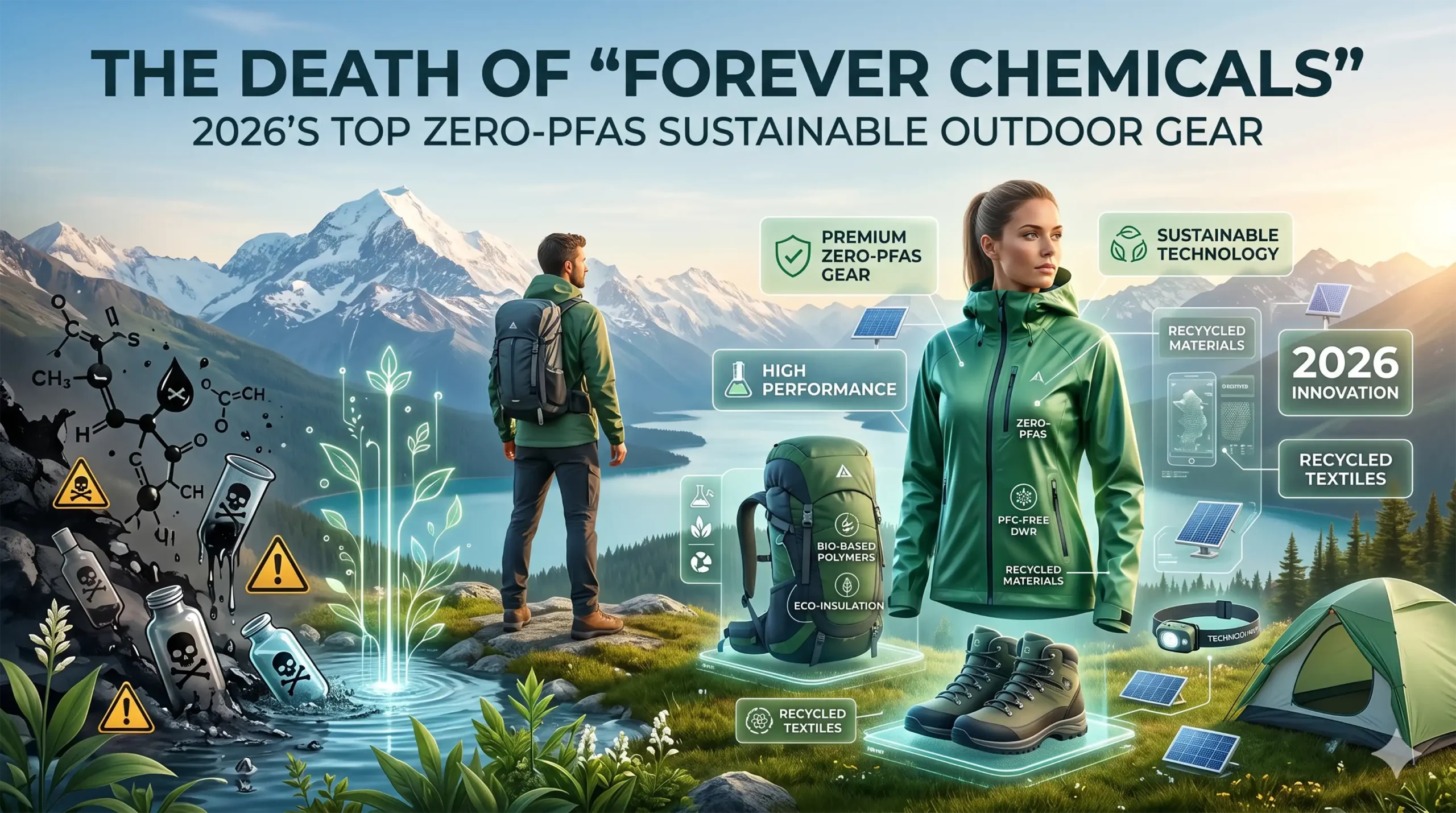
The good news? The era of toxic rainwear is officially over. Driven by sweeping 2026 bans across the EU, France, Minnesota, and New York, the outdoor industry has been forced to innovate. Today, zero pfas outdoor gear isn’t just a niche, eco-friendly option; it is the new gold standard for high-performance apparel.
Here is exactly how the technology has changed, why you need to rethink how you care for your gear, and our top picks for the best PFC free DWR equipment of 2026.
The Tech Shift: Silicone vs. Plant-Based Repellents
For years, brands relied on “C8” and “C6” carbon-chain chemical finishes. When regulations clamped down, textile engineers had to figure out how to make water slide off a jacket without using toxic fluorine.
Enter the new class of “C0” DWR (Durable Water Repellent). These alternatives generally fall into two camps:
- Silicone-Based DWR: Utilizing highly cross-linked polysiloxanes, this coating creates a durable, invisible barrier on the fabric. It offers fantastic wash durability and is highly effective at shedding heavy rain.
- Plant-Based Waxes & Polyurethanes: Chemical companies like Archroma are now producing hyper-branched polyurethanes with up to 60% bio-carbon content. They are literally using plant-based esters and natural fatty acids to create high-performance water barriers.
The Catch? You Actually Have to Wash Your Gear Now. Old PFAS coatings were highly oil-resistant, meaning they repelled your body sweat and campfire grease just as well as rain. The new bio-based and silicone alternatives are incredibly waterproof, but they do absorb body oils more easily. If you want your 2026 jacket to keep beading water, you have to wash and tumble-dry it regularly to reactivate the eco-friendly DWR.
Circular Fashion & The Repair-First Culture
Let’s be honest: slapping a “made with recycled plastic bottles” tag on a jacket doesn’t automatically make an ethical outdoor brand. In 2026, true sustainability is about longevity.
With new Extended Producer Responsibility (EPR) laws hitting states like California, brands are now financially responsible for the end-of-life recycling of their garments. Because of this, the industry is shifting heavily toward a “Repair-First” culture.
The most sustainable hiking gear is the gear you don’t have to throw away. Brands with robust repair programs (like Patagonia’s Worn Wear) or materials designed to be easily re-waxed at home are winning the loyalty of serious outdoorsmen and women. It is no longer about buying a new jacket every two years; it is about buying one incredible jacket and maintaining it for a decade.
The Top 5 Zero-PFAS Performers of 2026
We tested the latest releases to see if the new chemical-free tech could actually hold up to a brutal backcountry storm. Here are the clear winners.

- Origin of fabric: China, Origin of dyeing: China 3L 40dx70d Gore-Tex ePE, recycled nylon plain weave, Jet Dyed, FC0 DWR, 3L 40dx70d Gore-Tex ePE with C-KNIT backer technology plain weave recycled nylo…
- Imported
- Beta SL Jacket: Lightweight highly versatile Gore-Tex ePE shell
1. The Alpine Standard: Arc’teryx Beta SL Jacket
Arc’teryx took their time moving away from PFAS, but the result is a masterpiece. The newly redesigned Beta SL features the revolutionary GORE-TEX ePE (expanded polyethylene) membrane. It is shockingly light, impossibly breathable, and uses absolutely zero forever chemicals. If you need a bombproof shell for serious mountaineering, this is the 2026 benchmark.

2. The Everyday Hero: Patagonia Torrentshell 3L
Patagonia was one of the earliest pioneers in the push for PFAS-free manufacturing. Their legendary Torrentshell 3L now uses a 100% recycled ripstop nylon face and a completely PFC-free H2No Performance Standard membrane. At under $200, it remains the absolute best value for hikers and commuters looking for ethical, reliable rain protection.

- Nylon
- High-performance, high-strength OSMO poly-nylon ripstop fabric has 4x better water repellency and 3x less stretch when wet. OSMO fabric is made from 100% recycled yarns that are PFAS-free and meet fla…
- Subdued colors and non-reflective materials allow stealth camping.
3. The Shelter Innovator: Nemo OSMO Tents
Tents have historically been drenched in toxic fire retardants and PFAS water repellents. Nemo changed the game with their proprietary OSMO fabric. Woven from a blend of 100% recycled nylon and polyester, the fabric itself is naturally water-resistant, meaning it doesn’t sag when wet and requires zero PFAS treatments to keep you bone-dry in a storm.

4. The Workwear Throwback: Outback Trading Co. Oilskin Jackets
Sometimes the best technology is the oldest. For heavy-duty ranchers and trail workers, modern synthetic shells often rip on barbed wire or thick brush. Outback Trading Co. relies on heavy cotton canvas infused with oil and wax. It is completely PFAS-free, incredibly tough, and you can re-waterproof it endlessly at home using their plant-based Duckback Wax.

5. The Stretch Performer: Mountain Hardwear Threshold
Mountain Hardwear introduced their “DrySpell” standard this year, requiring all qualifying gear to use non-PFAS C0 DWR. The Threshold jacket utilizes a 70D recycled nylon ripstop that actually stretches with your body. It is proof that bio-based outdoor fabrics can be quiet, soft, and comfortable without sacrificing extreme wet-weather protection.
The Bottom Line
Phasing out forever chemicals was the hardest manufacturing challenge the outdoor industry has faced in decades. But as the 2026 lineups prove, we didn’t have to sacrifice performance to save the environment. By choosing zero-PFAS gear and committing to washing and repairing it, you can keep the wild places you love pristine for the next generation.