Table Of Contents


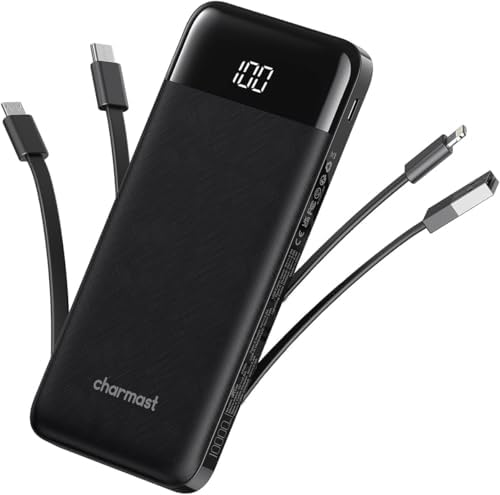
- Portable Charger with 2 Built-in Cables >>>: PB-08 battery pack has 1* iOS cable, 1* Type-C cable, 3* Charging ports(USB-A, Type-C, Micro), which supports charging almost all smart devices on the mark…
- 15000mAh Mini Size, Lighter & Smaller Than a Phone >>>: Tired of hauling a brick-like power bank? The PB-08 uses high-density polymer battery technology to deliver 15,000mAh capacity in a significantl…
- PD22.5W Fast Charge, 30 Mins Full-Day Power >>>: CFIAI portable phone charger combines the most advanced PD & QC fast charging technologies, the USB C cable supports PD22.5W, iOS cable supports 20W, U…
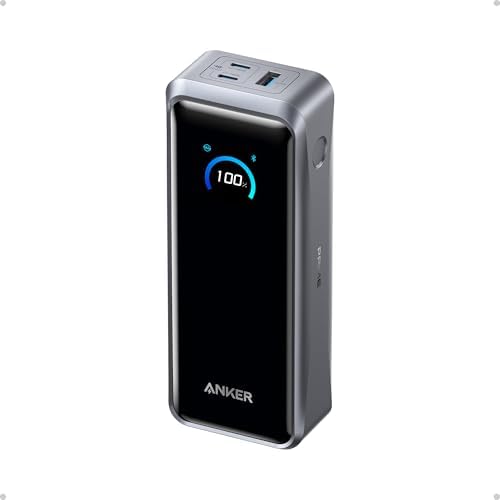
- 300W Total Output Power: Offers 300W max output across two USB-C and one USB-A port, keeping two MacBook Pros running at full speed.
- 140W Max Fast Charging: Delivers up to 140W high-speed output for fast laptop charging when connected to a 5A cable. Power a MacBook Pro (M4 Pro) to 50% in 27 minutes or an iPhone 16 Pro to 50% in 26 …
- Anker’s First 250W Dual-Port Input—Recharge to 50% in Just 13 Minutes: With industry-leading 250W dual USB-C input, recharge the power bank to 50% in 13 minutes or 40% in just 10 minutes. Ideal for hi…
Does Cold Weather Drain Portable Chargers?
(Affiliate Disclosure: Some of the links in this article are affiliate links. If you purchase through these links, Gadget Earth may earn a small commission at no extra cost to you. We only recommend sustainable gear, off-grid tech, and resources we rigorously evaluate. As an Amazon Associate, we earn from qualifying purchases.)
If you’ve ever reached for your power bank during a winter hike only to find it dead—despite charging it fully the night before—you’ve experienced the “cold weather battery tax.” Whether you are a digital nomad working from a ski resort or a backpacker on a snowy trail, winter conditions change the rules of portable power.
Does cold weather drain portable chargers? Yes, cold weather causes portable chargers to lose power significantly faster. Low temperatures increase the battery’s internal resistance, which slows down the chemical reactions needed to hold and deliver a charge. In sub-freezing temperatures, a lithium-ion battery can appear to lose up to 30% to 50% of its capacity instantly.
Here is the science behind why your tech hates the cold and the “Gadget Earth” rules for keeping your gear alive when the temperature drops.
The Science: Why Batteries Get Sluggish in the Cold
Portable power banks rely on Lithium-ion (Li-ion) chemistry. To provide power, lithium ions move through a liquid electrolyte solution between the battery’s electrodes.
When the temperature drops, this liquid electrolyte becomes more viscous (thicker). Imagine trying to run through a swimming pool filled with honey instead of water—that is what is happening inside your battery. Because the ions move slower, the battery’s internal resistance increases.
The “Phantom” Drain vs. Real Drain:
Most of the time, the power hasn’t actually “disappeared.” The cold simply lowers the voltage of the battery. Since your phone or laptop reads battery life based on voltage, it thinks the battery is empty because the voltage is too low to power the device. If you bring that same “dead” power bank back into a warm room, the voltage will often stabilize, and the battery percentage will “magically” climb back up.
The Golden Rule: Never Charge a Frozen Battery
While using a cold battery is annoying, charging a frozen battery is dangerous.
If you attempt to charge a lithium-ion battery when it is below 0°C (32°F), it can cause a phenomenon called “Lithium Plating.” Instead of the ions flowing into the anode, they coat the surface in metallic lithium. This creates permanent damage, drastically reduces the battery’s lifespan, and can even lead to a short circuit or fire.
The Fix: If your power bank has been sitting in a cold car or a tent all night, tuck it inside your jacket for 30 minutes to let it reach room temperature before plugging it into a solar panel or wall outlet.
How to Protect Your Portable Chargers in Winter
To keep your off-grid power setup efficient during winter travels, follow these three practical tips:
1. Use Body Heat (The Inner Pocket Rule)
The best way to keep a battery healthy is to keep it near a heat source. When hiking, don’t keep your power bank in the outer brain of your backpack. Store it in an internal jacket pocket close to your body. Your natural body heat will keep the electrolyte fluid thin and ready to flow.
2. Insulate Your Tech
If you have to keep your gear in a bag, use a dedicated thermal sleeve. If you don’t want to buy extra gear, wrapping your power bank in a spare wool sock or a down jacket provides enough insulation to slow down the cooling process.
3. Turn Off Your Tech When Not in Use
Chemical reactions are still happening even when your device is on standby. In extreme cold, the “parasitic drain” of a powered-on device is accelerated. If you aren’t actively using your power bank to charge a phone, keep it powered off and disconnected.
The Gadget Earth Verdict
Cold weather doesn’t have to be the end of your off-grid adventures. While the cold will always make your lithium-ion batteries less efficient, understanding that it’s a voltage issue rather than a permanent loss of power is key.
By keeping your chargers warm against your body and—most importantly—waiting until they are warm before you recharge them, you can protect your tech’s lifespan and ensure you always have enough juice for that emergency call or summit photo.