Table of Contents
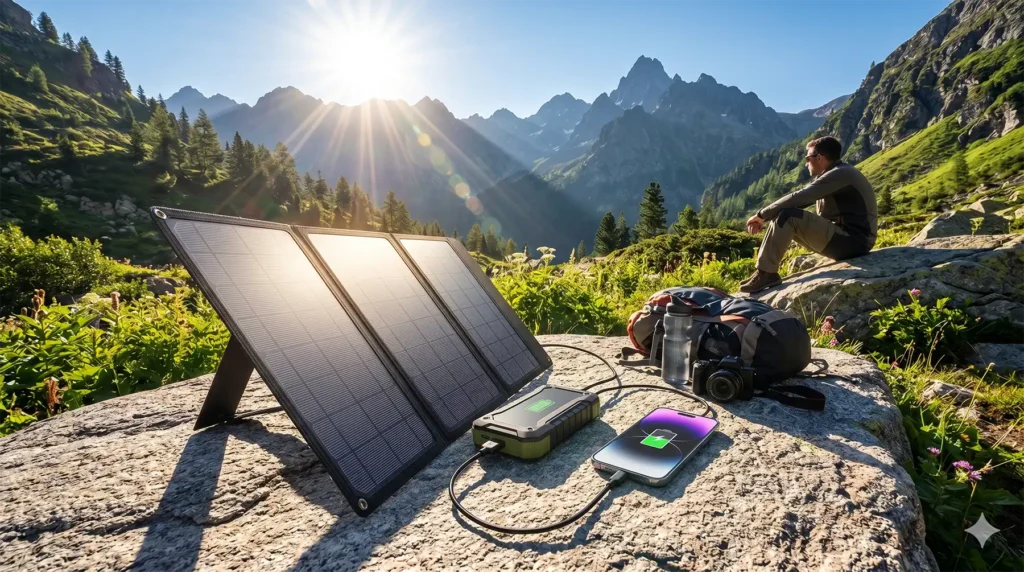
If you work remotely from a van, cabin, or deep in the backcountry, you already know the struggle: power is heavy. For years, keeping a Starlink dish, laptop, and monitor running off-grid meant hauling around massive, back-breaking blocks of lithium-ion batteries.
But 2026 marks a massive shift in outdoor gear. The era of heavy, fire-prone lithium-ion power stations is ending, making way for the first true wave of solid-state portable power. Let’s break down exactly what this means for your setup, how the new tech holds up under heavy loads, and whether it’s actually worth the steep price tag.

- 𝗗𝗶𝗿𝗲𝗰𝘁 𝗙𝗶𝘁 𝗚𝗿𝗼𝘂𝗽 𝟰𝟴 𝗖𝗮𝗿 𝗕𝗮𝘁𝘁𝗲𝗿𝘆: Our 12V car battery features standard Group 48/H6/L3/66L3 (279*175*189mm/10.9″ *6.88″ *…
- 𝟭𝟬-𝗬𝗲𝗮𝗿 𝗟𝗶𝗳𝗲𝘀𝗽𝗮𝗻: Unlike AGM car batteries or traditional lead-acid auto battery that need replacement every 2–3 years, …
- 𝟭𝟮𝟬𝟬𝗔 𝗖𝗖𝗔 𝗖𝗮𝗿 𝗕𝗮𝘁𝘁𝗲𝗿𝘆: Powered by advanced BMS, our automotive replacement batteries maintains stable 1200CCA output and…
The Tech Explained: What is a Solid-State Battery?
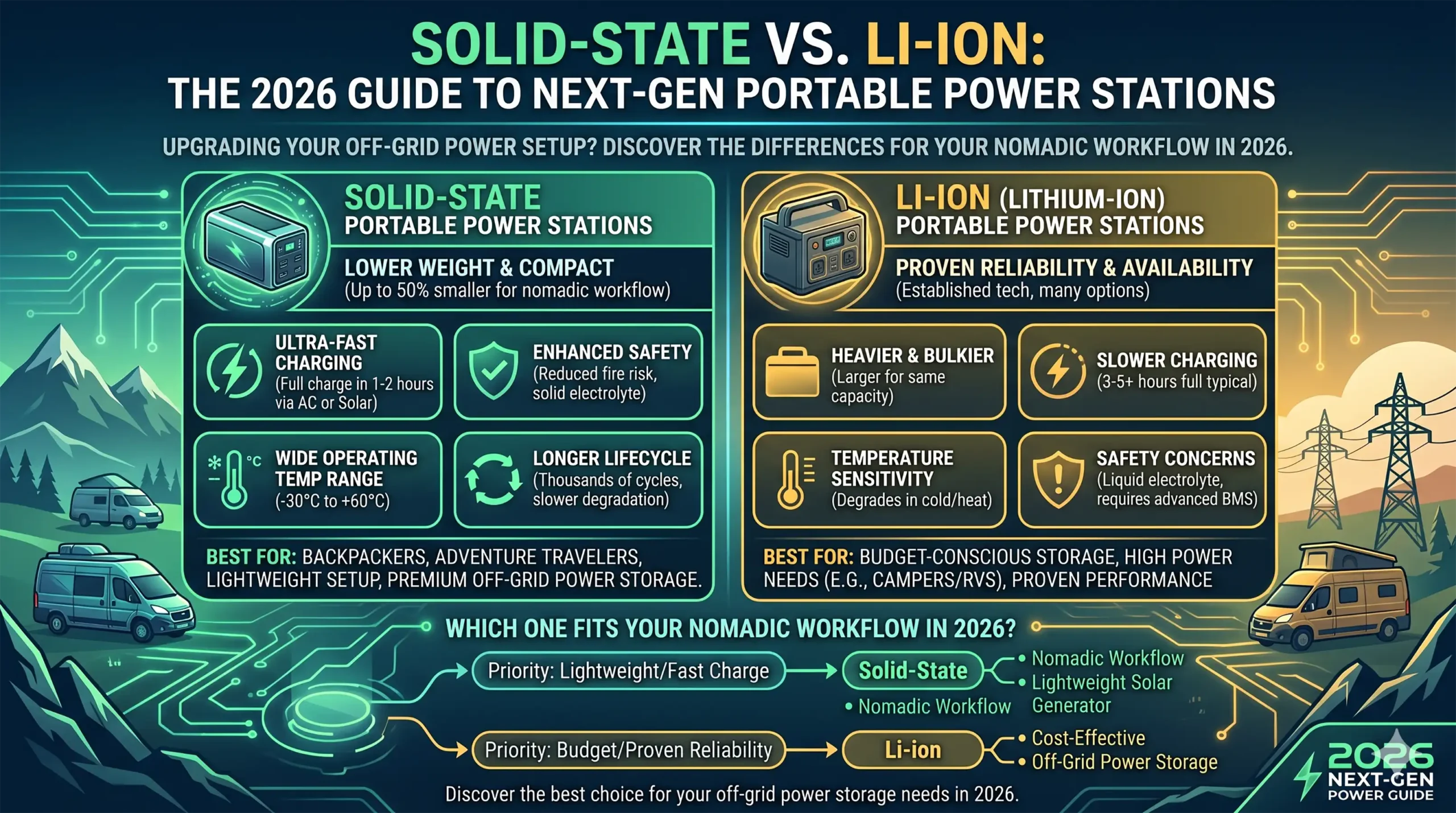
To understand why this is such a leap forward, we have to look inside the box. Traditional lithium-ion and $\text{LiFePO}_4$ (LFP) batteries use a liquid electrolyte to move ions back and forth between the anode and cathode. This liquid is heavy, it takes up a lot of physical space, and if the battery gets punctured or overheats, that liquid is highly flammable.
Solid-state batteries replace that liquid with—you guessed it—a solid electrolyte (usually a ceramic or glass material).
Here is why that single physical change is completely revolutionizing off-grid tech:
- Up to 2.5x Higher Energy Density: Because you don’t need all the extra protective casing and space for liquid, you can pack dramatically more power into a much smaller, lighter footprint.
- Zero Thermal Runaway Risk: Solid electrolytes aren’t flammable. You can literally shoot a solid-state battery with a bullet (though we don’t recommend it), and it won’t burst into a toxic fireball.
- Wider Temperature Range: Liquid electrolytes get sluggish in freezing weather and degrade in extreme heat. Solid-state units hum along smoothly whether you’re parked in the Mojave Desert or the Alaskan tundra.
Real-World Load Testing: Anker vs. Yoshino
Specs on a page are great, but how do these chemistries compare when you’re actually trying to run a remote office? Let’s look at a direct comparison between the current benchmark for lithium-ion and the leading solid-state contender.
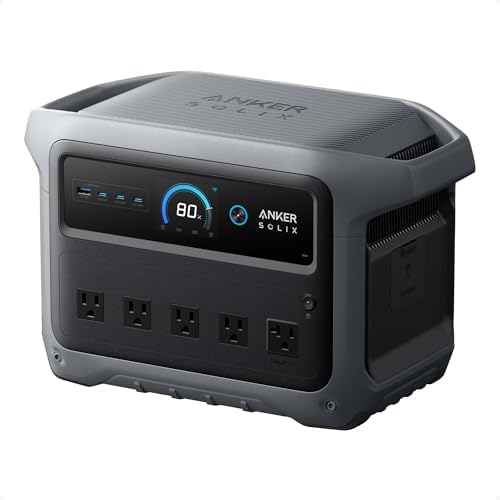
- 49 Min UltraFast Recharging: With upgraded HyperFlash tech, fully recharge at 1,600W—for outage prepping, camping trips,…
- 2,000W Output via 10 Ports: Delivers 2,000W (3,000W peak) and 1,024Wh capacity. Power up to 10 devices—ideal for emergen…
- Compact and Portable: Easily carry, store, and move from room to room, your RV, or even on beach and park outings. C1000…
The Heavyweight Li-ion: Anker Solix C1000 V2
Anker refined a winning formula here. The Gen 2 is an incredible lithium-iron-phosphate (LFP) machine. It boasts a 1,056Wh capacity, incredibly fast 49-minute wall charging, and an 1,800W inverter that can run heavy power tools or an induction cooktop.
The downside? Even after a recent 11% weight reduction, it still weighs 25 pounds. It’s a fantastic unit, but if you’re frequently moving your setup from a truck bed to a picnic table to a tent, you are going to feel that weight.
The Solid-State Challenger: Yoshino B4000 SST
Yoshino is currently leading the charge in solid-state commercial tech. Their flagship unit packs a massive 2,611Wh of capacity with a 4,000W output.
If you built an LFP battery with those exact specs, it would weigh well over 100 pounds. The Yoshino weighs just 53.6 pounds. For digital nomads running heavy continuous draws—like a Starlink dish (which pulls 25-40W non-stop), a MacBook Pro, a drone charger, and an electric cooler—that energy-to-weight ratio is a total game changer.
| Feature | Anker Solix C1000 V2 (LFP) | Yoshino B4000 SST (Solid-State) |
| Capacity | 1,056 Wh | 2,611 Wh |
| Weight | 25 lbs | 53.6 lbs |
| Energy Density | ~42 Wh per lb | ~48 Wh per lb |
| Safety Profile | High (LFP is stable) | Maximum (No thermal risk) |
Is it Worth the Price Upgrade?
This is the ultimate question. Solid-state technology is cutting-edge, which means it carries a premium “early adopter” tax. Right now, solid-state power stations cost roughly $1.50 to $2.00 per Watt-hour, compared to $0.50 to $0.80 per Watt-hour for standard LFP units.
Here is the strict ROI breakdown:
If you are a full-time remote professional or van-lifer:
The upgrade is absolutely worth it. When you live and work off-grid, payload weight and spatial efficiency are your two most valuable commodities. The ability to double your power capacity without having to reinforce your vehicle’s suspension or give up crucial storage space is an investment that pays daily dividends in your quality of life. Furthermore, the enhanced safety profile gives incredible peace of mind when sleeping inches away from your power bank.
If you are a weekend camper:
Stick to Lithium-ion (specifically LFP) for now. If you only need a battery to top off your phone, run some LED camp lights, and keep a few beers cold from Friday to Sunday, a $300-$500 Li-ion unit like the Jackery Explorer 300 or Anker Solix will do exactly what you need. Save your money until solid-state manufacturing scales up and prices drop over the next few years.

- 【N-Type 16BB High-Efficiency Solar Cells】The Callsun 200 watt solar panel is built with advanced N-type solar cells and …
- 【Boost Your Power with Bifacial Technology】Callsun 400W bifacial solar panels feature a transparent backsheet that captu…
- 【TwinCell Anti-Shade Technology】The Callsun 200W solar panel uses an innovative dual-module parallel design, splitting t…
Want to know how much solar you need to keep these charged?
How many watts of solar panels do I need to keep a 1000Wh to 2500Wh portable power station continuously charged while off-grid?
To keep a 1000Wh to 2500Wh portable power station continuously charged off-grid, you will generally need between 300W and 800W of solar panels, depending on your exact battery capacity and daytime power consumption.
Here is the exact breakdown of how to size your solar array to ensure you never run out of juice.
The Solar Sizing Formula
To calculate exactly what you need, use this standard formula based on Peak Sun Hours (the number of hours per day the sun is strong enough for optimal output, which averages about 4 hours in most moderate climates):
Target Solar Watts = Battery Capacity (Wh) \ Peak Sun Hours X 1.25
Note: The 1.25 multiplier accounts for a realistic 20% to 25% efficiency loss due to heat, imperfect panel angles, slight haze, and wiring resistance. Panels almost never perform at their perfect laboratory rating in the wild.
Breakdown by Power Station Size
For a 1000Wh Power Station:
If you want to refill a fully depleted 1000Wh station in one day (assuming 4 peak sun hours):
- The Math: (1000 / 4) X 1.25 = 312.5W
- The Recommendation: A 300W to 400W solar array is the comfortable sweet spot. A single 200W panel is the absolute bare minimum, but it will likely take a day and a half to fully charge if conditions are anything less than perfect.
For a 2500Wh Power Station:
If you want to refill a fully depleted 2500Wh station in one day:
- The Math: (2500 / 4) X 1.25 = 781.25 W
- The Recommendation: An 800W to 1000W solar array is ideal for reliable daily recharges.
Crucial Real-World Factors to Consider
- Charging While Using (Pass-Through): The calculations above only cover refilling an idle battery. If you are actively drawing 100W to run a laptop and router while the sun is shining, your panels have to supply that 100W plus whatever is needed to charge the battery. If you are heavy on daytime usage, you need to oversize your array to cover that continuous draw.
- Station Input Limits: Before buying massive panels, verify your power station’s maximum solar input limit (found in the manual). A standard 1000Wh station might physically cap incoming solar power at 400W. If your station has a 400W limit, attaching 600W of panels won’t charge it any faster—the internal charge controller will simply throttle the excess power.
- Wiring Configurations: Make sure the total voltage (Voc) of your solar panels matches the limits of your power station’s MPPT controller. If you wire too many panels in series and exceed the maximum input voltage, you risk permanently damaging the power station.
- 【N-Type 16BB High-Efficiency Solar Cells】The Callsun 200 watt solar panel is built with advanced N-type solar cells and …
- 【Boost Your Power with Bifacial Technology】Callsun 400W bifacial solar panels feature a transparent backsheet that captu…
- 【TwinCell Anti-Shade Technology】The Callsun 200W solar panel uses an innovative dual-module parallel design, splitting t…
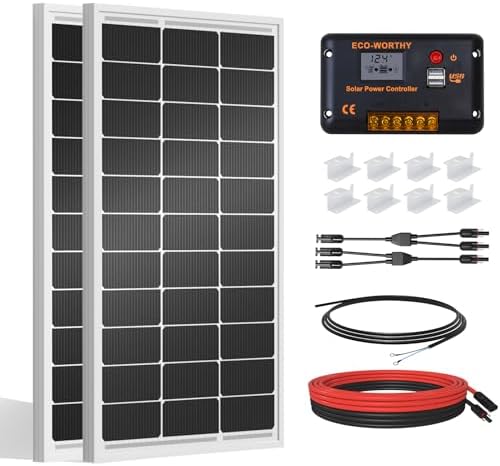
- [Wide Application]: Daily Output 800wh/day under 4 hours full sunshine condition. Perfect for RV, Caravan, Marine, Campe…
- [Excellent Performance]: ECO-WORTHY solar panels use high-performance monocrystalline solar cells, which can provide up …
- [Durable]: Corrosion-resistant aluminum alloy frame, so that the panel can be used for decades, and can withstand strong…

- 【Perfect Size for Class B Vans】This 400w solar panel is 7.5% smaller and 11.7% lighter than its predecessor, offering th…
- 【25% Cell Efficiency】Renogy’s 400 watt solar panels feature 25% efficiency, with advanced 16BB cell technology for bette…
- 【Improved Efficiency and Flexibility】The 24V solar panel minimizes current loss and boosts system efficiency, generating…